

Search


Ordinary dosing device
Ordinary dosing device

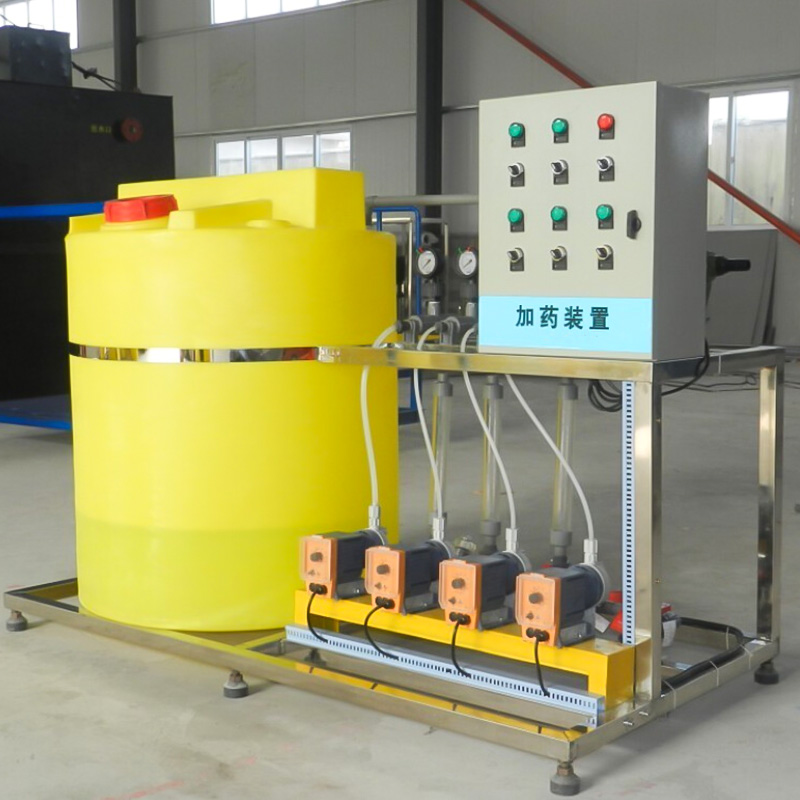
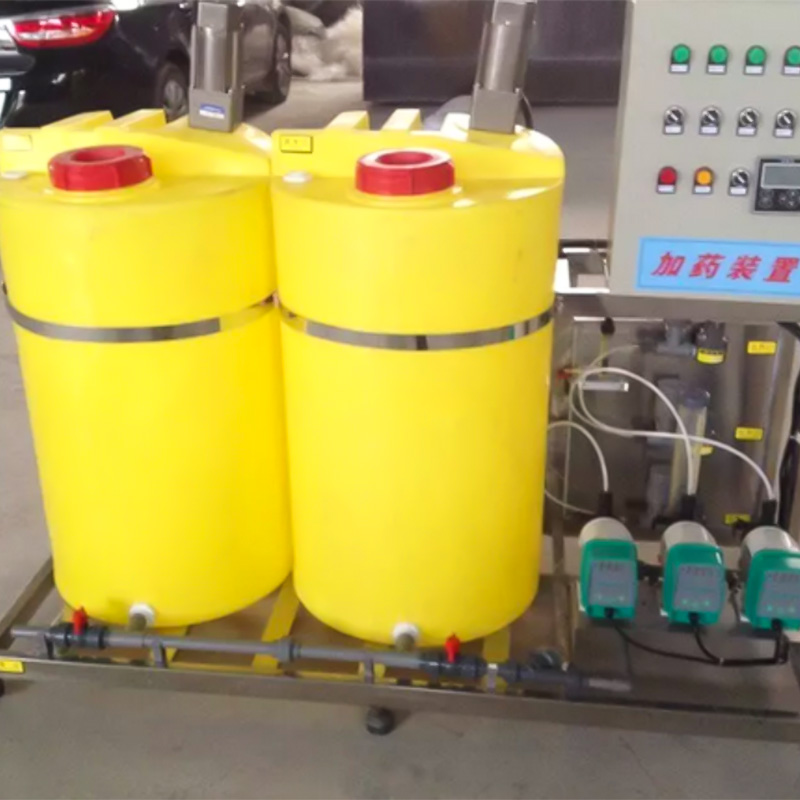
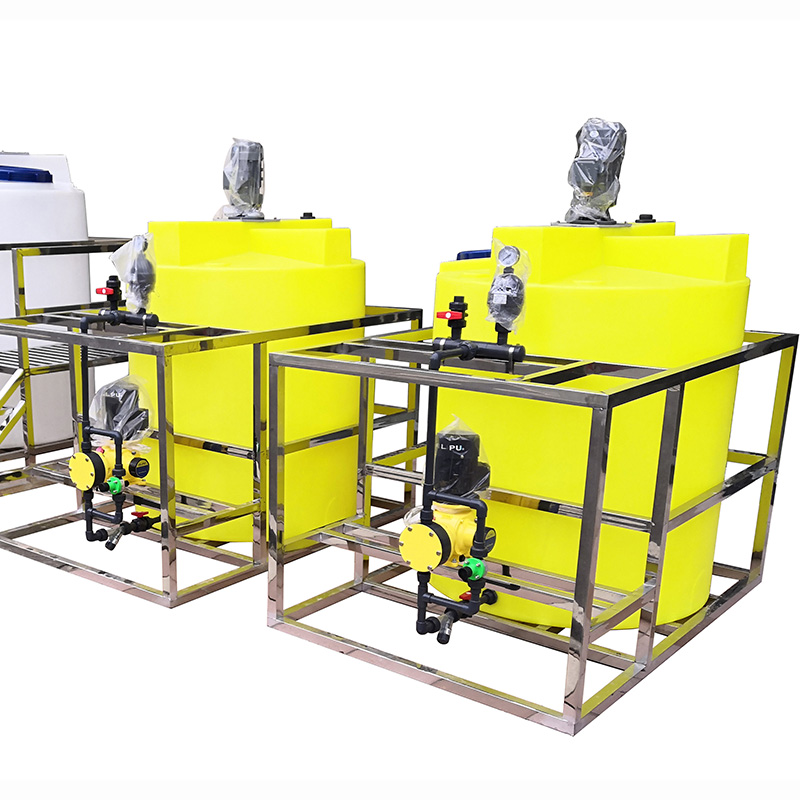
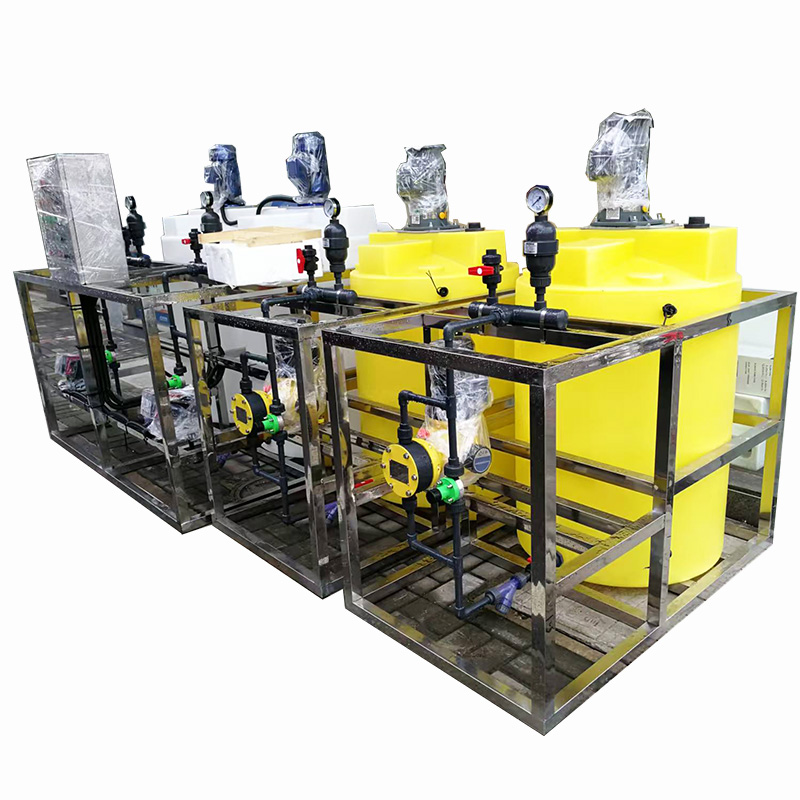
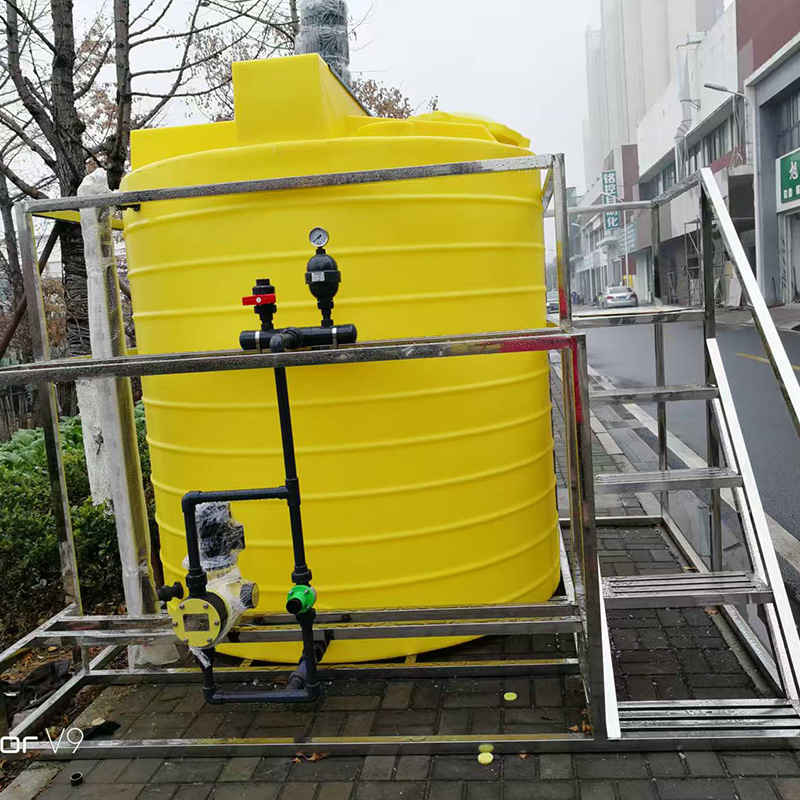
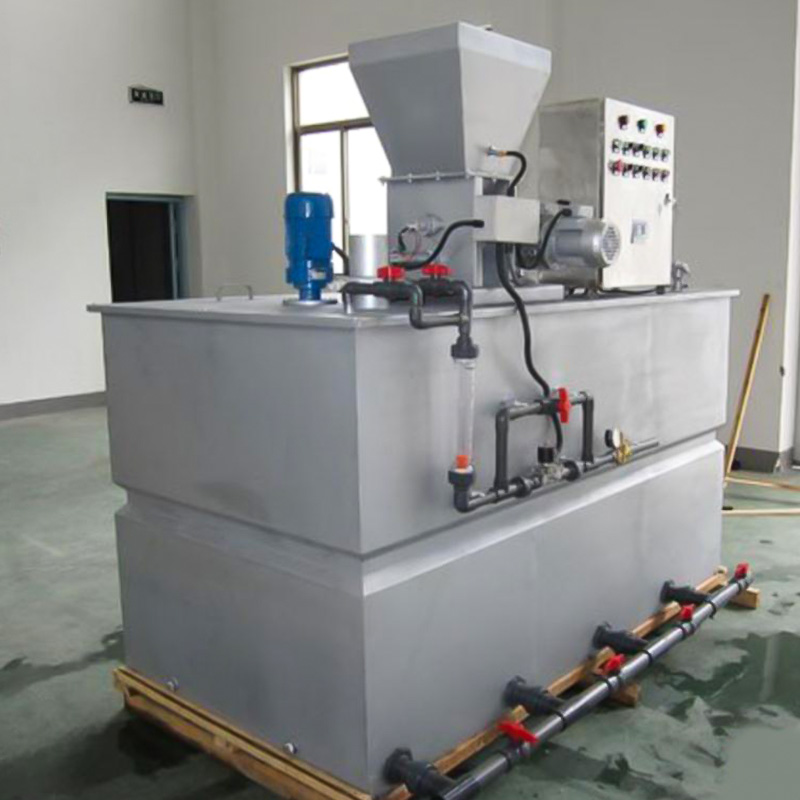
This automated dosing system is developed and manufactured for use in the treatment of boiler feedwater, circulating water, as well as the dosing of substances such as ammonia and phosphates in power plants; it can also be applied in industries including petroleum, chemical processing, environmental protection, and water supply systems. The modular dosing unit consists of a solution tank, metering pump, filter, safety valve, check valve, pressure gauge, buffer tank, level gauge, and control cabinet, all integrated and mounted on a single base. The user simply installs the modular dosing unit in the dosing room, connects the inlet and outlet ports, and activates the power supply to commence operation. This factory-assembled complete system significantly reduces both the design and on-site installation workload, providing a reliable guarantee for the overall system's quality, safety, and successful commissioning.
The dosing device is also known as the dosing system or dosing equipment.
A dosing device is a complete set of equipment designed to inject chemical solutions into various systems according to the process flow; these devices can be classified into three main categories depending on their application scenario.
1. Oilfield chemical dosing system: Primarily used for injecting various chemical solutions—such as flocculants, scale inhibitors, corrosion inhibitors, and demulsifiers—into wellheads and other systems on offshore platforms during oil extraction operations.
2. Boiler dosing unit: Suitable for adding ammonia or hydrazine to boiler feedwater, to condensate water, for boiler shutdown protection, as well as for adding phosphates to steam boilers; primarily used in power plants and thermal power stations.
3. Water Treatment Chemical Dosage Unit: This device is used to add chemicals to tap water, wastewater, or sewage during water treatment processes. It is primarily employed in water supply and distribution treatment, environmental protection, and other industrial process flows—such as in water treatment plants, hotels, restaurants, swimming pools, and wastewater treatment plants.
The dosing unit primarily uses a metering pump as the main dosing device, along with a solution preparation tank and a mixer.
The level gauge, safety valve, check valve, pressure gauge, filter, buffer, piping system, valves, base, ladder, automatic monitoring system, and power control system are assembled on a common platform according to the process flow requirements to form a single module – known as a "pallet-mounted modular unit" (abbreviated as "pallet unit"). As required, a predetermined quantity of chemical agent is added to the mixing solution tank for stirring and dissolution; once dissolution is complete, the solution is pumped to the dosing point via a metering pump. The dosage of the chemical agent can be freely and arbitrarily adjusted to meet the requirements of various application scenarios.
The dosing device features a mechatronic structural design and can be classified into fixed and mobile (trolley-type) configurations based on its installation method; each type is equipped with a mixing system, a dosing system, and an automatic control system. Multiple fixed modular units can be combined into a single integrated system; when paired with a variable-frequency drive control system, this setup enables local control, remote automatic control, or the seamless switching between manual and automatic dosing modes. The Zhuliji dosing device offers advantages such as a compact structure, small size, low noise levels, smooth operation, simple installation, and user-friendly operation.
The dosing unit employs various process designs to precisely prepare solutions of various solid and liquid chemical reagents, which are then accurately dosed using metering pumps to meet specific design requirements—such as descaling, deaeration, coagulation, acid addition, or alkali addition.
The dosing process can be operated manually or automated using various electrical devices and instruments—such as PCs, magnetic flap level gauges, pH meters, travel controllers, and frequency converters—to transform the dosing system into a mechatronic product capable of automatic control.
The dosing rate and dosing pressure of the dosing unit can be determined by selecting an appropriate metering pump according to the requirements of the industrial process. Suitable products are available for flow rates ranging from 1 L/h to 8000 L/h and pressures ranging from 0.1 MPa to 25 MPa.
The metering pump offers a metering accuracy of up to ±1% and enables the simultaneous transport of multiple media with individual adjustment capabilities.
The volume of the solution tank in the dosing unit can range from a minimum of 0.1 m³ to 20 m³, depending on the required dosing quantity. Depending on the conveyed medium, various materials are available for selection, such as carbon steel (carbon steel with rubber lining), stainless steel, or non-metallic materials (PE, PVC, PP, PTFE), among others.
The complete system primarily consists of a feeding system, a medication storage tank, a dosing system, and a power control system.
The mixing tank is equipped with all the necessary facilities for automated operation, including a level gauge, low-level alarm, and valves. The entire outer surface of the tank is fitted with magnetic flap level gauges for real-time monitoring of the internal liquid level; the top of the tank features a feed inlet and a standby outlet, while the side of the tank is provided with a discharge outlet, a sewage discharge outlet, an overflow outlet, a level gauge interface, and the corresponding配套 valves. When the liquid level inside the tank falls below the preset low-level threshold, the alarm system is automatically activated and the dosing pump is stopped. The dosing system comprises a centrifugal pump, an electromagnetic flowmeter, and related valves.
|
Device Name |
Combination Type |
Solution Preparation Box Volume (m³) |
controlled volume pump kind |
controlled volume pump rate of flow(L/h) |
controlled volume pump pressure(Mpa) |
Dosing way |
|
Hydrazine Deoxygenation Dosage Unit |
Two tanks, two pumps Two tanks, three pumps |
1.0 1.5 2.0 |
plunger type Mechanical diaphragm type Hydraulic diaphragm type |
30-200 |
1.6-24 |
hand movement voluntarily |
|
PH adjustment and ammonia addition unit |
Two tanks, two pumps Two tanks, three pumps |
1.0 1.5 2.0 |
plunger type Mechanical diaphragm type Hydraulic diaphragm type |
30-200 |
1.6-24 |
hand movement voluntarily |
If you are looking for a reliable water treatment equipment supplier or manufacturing partner,
please feel free to contact us.
We are ready to support your water and wastewater treatment projects.

 Telephone
 WhatsApp
 Email:
 Address