

Search


Mechanical filter
Mechanical filter




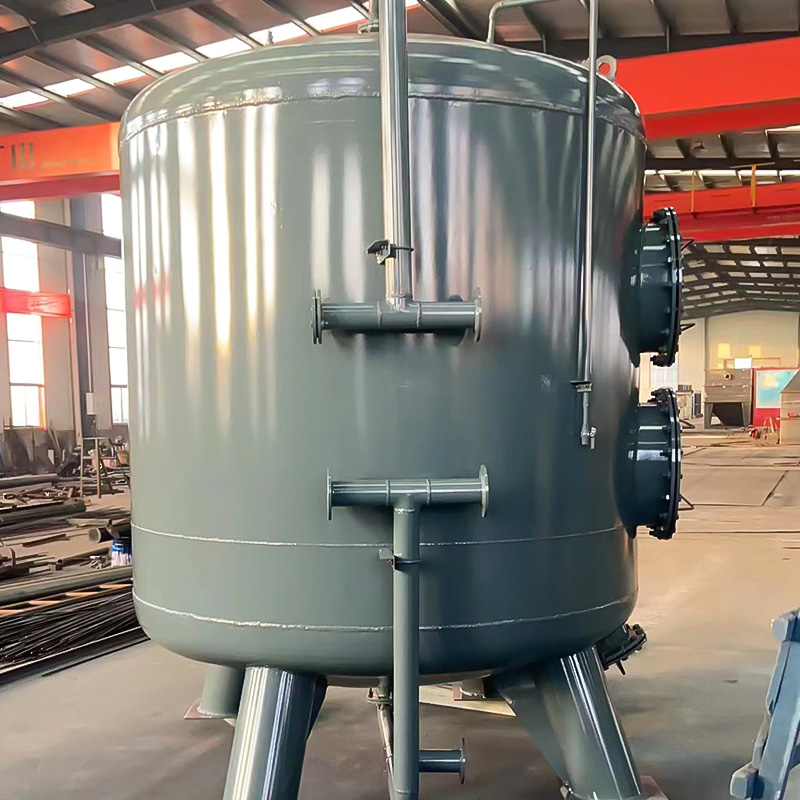
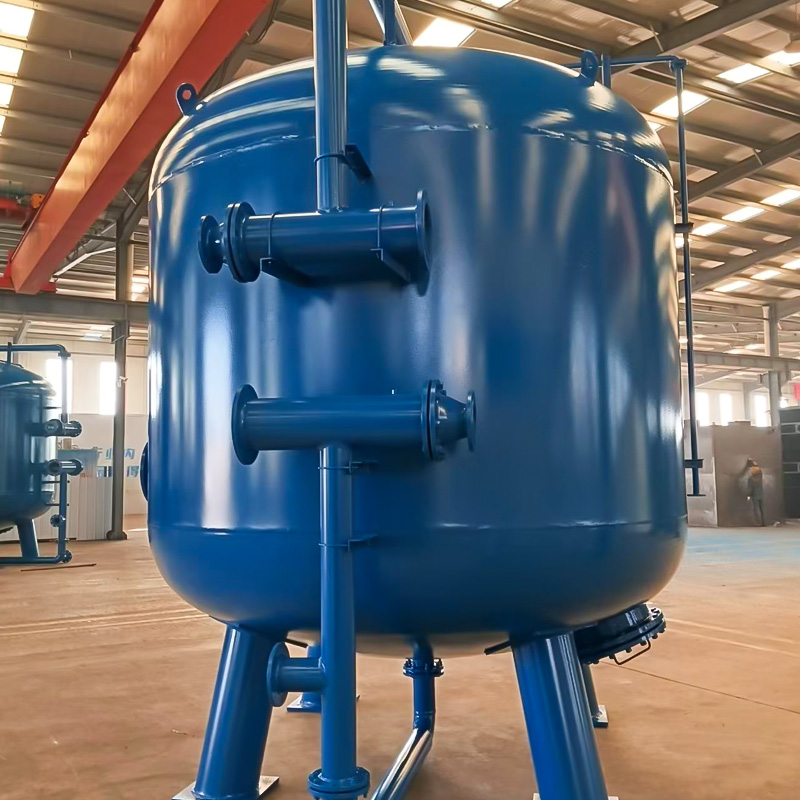
The mechanical filter, also known as a pressure filtration filter, is an essential component of the pre-treatment stage in pure water production and of water purification systems. It can be constructed from steel lined with rubber or stainless steel. Depending on the filtration medium used, these filters are classified into types such as natural quartz sand filters, multi-media filters, activated carbon filters, and manganese sand filters; based on the inlet water configuration, they can be categorized as single-flow or dual-flow filters; and they can be employed either in combination or independently, depending on the specific application requirements.
The fully automatic mechanical filter is suitable for industrial and mining enterprises, as well as urban water supply treatment systems, where the filtered effluent turbidity should generally not exceed 5 mg/L to comply with drinking water quality standards for industrial or domestic water applications. It demonstrates excellent effectiveness in removing suspended solids and other particulate matter from industrial wastewater. For suspended solids or aggregated sheet-like particles in water that cannot be removed by sedimentation methods—particularly bound colloidal particles—the water can be passed through the filter media housed within a pressure filter to achieve clarity.
The mechanical filter, also known as a pressure filter, serves as a critical component of water purification systems and represents the initial pretreatment stage in pure water production processes. These filters are typically constructed from steel lined with rubber or stainless steel; their specific applications and functions vary depending on the type of filter media used. Common types include quartz sand filters, activated carbon filters, and manganese sand filters. These filters can be used individually or in combination, depending on the specific application requirements. The media used in a multi-media filter consist of quartz sand, anthracite, and other materials; their primary function is to remove suspended solids, mechanical impurities, organic matter, and other contaminants from the water, thereby reducing its turbidity. The media in an activated carbon filter is activated carbon, which is designed to adsorb and remove pigments, organic compounds, residual chlorine, colloids, and other substances from the water. The media in a manganese sand filter is manganese sand, which is primarily used to remove divalent iron ions from the water.
A mechanical filter utilizes one or more filtration media to force the feed solution through these media under a specified pressure, thereby removing impurities and achieving filtration. The packing inside the filter is typically composed of quartz sand or anthracite.
Granular porous ceramics, manganese sand, etc.; users may select the appropriate material based on their specific requirements.
The mechanical filtration system primarily utilizes packing materials to reduce water turbidity and to intercept and remove suspended solids, organic matter, colloidal particles, microorganisms, chlorinated odors and tastes, as well as certain heavy metal ions – making it one of the traditional water treatment methods for purifying feedwater.
Operating Principle: The mechanical filter (also known as a multi-media filter or quartz sand filter) is a pressure filtration device that utilizes a packed filter media of refined quartz sand. When feed water flows downward through the filter layer, suspended solids and colloidal particles are removed from the water, thereby reducing its turbidity. Performance: This filter is primarily used for turbidity removal, water softening, and as a pre-treatment step before electrodialysis or reverse osmosis processes; it can also be applied to surface water and groundwater treatment. It effectively removes suspended solids, organic matter, colloids, sediment, and other contaminants from water.
This product is primarily used in water treatment processes for turbidity removal in water supply treatment, as well as for pre-treatment in reverse osmosis and ion exchange softening/desalination systems; it can also be employed for sediment removal from surface water and groundwater. The inlet turbidity should be less than 20 NTU, and the effluent turbidity should be below 3 NTU.
This product can be widely applied in various industries—including electronics and power systems, petrochemicals, metallurgical and electroplating processes, paper and textile manufacturing, pharmaceutical and dialysis applications, food and beverage production, drinking water supply, industrial and enterprise water systems, and swimming pools—meeting the liquid filtration requirements of diverse sectors.
Quartz sand filter (sand filter), activated carbon filter (carbon filter), multi-media filter, iron and manganese removal filter (manganese sand filter), fiber ball filter, hair removal filter.
The single-flow mechanical filtration system features a simple piping configuration and operates smoothly. The filtration flow rate typically ranges from 4–50 m/h, and the operating cycle is generally 8 hours. The dual-flow mechanical filtration system is equipped with inlet devices at both the upper and lower ends, as well as a discharge device in the middle section. Its advantages include a high filtration capacity, strong contaminant removal capability, and a long operating cycle (typically 20 hours); however, its drawbacks include a relatively complex piping system, less stable operation, and greater difficulty in flushing and material replacement.
1. Low equipment cost, low operating expenses, and simple management.
2. The filter media can be reused after backwashing, resulting in a long service life for the filter media.
3. Excellent filtration performance and compact footprint
Operating pressure: 0.05 MPa – 0.6 MPa; Operating temperature: 5°C – 40°C (customizable for special temperature requirements); Single-unit flow rate: 0.5 m³/h – 80 m³/h; Operation mode: Manual or automatic control; Filtration rate: 5 m³/h – 12 m³/h (maximum 15 m³/h); Product specifications: Φ223 – Φ3000; Shell material: 304,316L, or Q235 (lined with rubber or coated with epoxy resin).
mechanical filter
◆ Principle: Adsorption Method
◆ Application: Solid–liquid separation
◆ Type: Vertical Filter
◆ Performance: High-efficiency filtration
◆Applicable object: Water
◆Applicable object: Low temperature materials
◆ Filter media type: Quartz sand
◆ Scope of application: Water treatment systems for industries such as petroleum, pharmaceuticals, automotive, light industry, water treatment, electroplating, and textiles.
Mechanical Filtration Performance Table
|
project name |
Φ1000 Single-stream mechanical filtration filter |
Φ1500 Single-stream mechanical filtration filter |
Φ2000 Single-stream mechanical filtration filter |
unit |
|
Filter effluent |
3.9~7.85 |
8.8~17.5 |
15.7~31.4 |
T/h |
|
Filter operating pressure |
0.6 |
0.6 |
0.6 |
Mpa |
|
Filter operating temperature |
5~30 |
5~30 |
5~30 |
C |
|
Filter Speed |
5~10 |
5~10 |
5~10 |
M/h |
|
Filter Area |
0.785 |
1.75 |
3.14 |
㎡ |
|
Filter material diameter |
0.5–1 (quartz sand) / 0.8–1.5 (anthracite) |
0.5–1 (quartz sand) / 0.8–1.5 (anthracite) |
0.5–1 (quartz sand) / 0.8–1.5 (anthracite) |
㎜㎜ |
|
Filter layer height |
1200 |
1200 |
1200 |
㎜ |
|
Filter inner diameter |
Φ1000 |
Φ1500 |
Φ2000 |
㎜ |
|
Total filter height |
2530 |
3423 |
5034 |
㎜ |
|
Filter Width |
1496 |
1705 |
2080 |
㎜ |
|
Support circumference Φ |
Φ1005 |
Φ1500 |
Φ1800 |
㎜ |
|
supporting stand size |
160×125 |
200×160 |
250×200 |
㎜ |
|
Raw water inlet diameter |
80 |
80 |
100 |
㎜ |
|
Water purification inlet diameter |
80 |
80 |
100 |
㎜ |
|
Reverse osmosis inlet diameter |
80 |
100 |
150 |
㎜ |
|
Compressed air inlet diameter |
40 |
50 |
80 |
㎜ |
|
Drainage outlet diameter |
80 |
80 |
100 |
㎜ |
|
Discharge outlet diameter |
80 |
100 |
150 |
㎜ |
|
Raw water intake elevation A |
800 |
1055 |
1000 |
㎜ |
|
Water purification inlet elevation B |
800 |
1055 |
1000 |
㎜ |
|
Filter material discharge port diameter |
150 |
150 |
150 |
㎜ |
|
weight of equipment |
1244 |
1256 |
2423 |
㎏ |
The size of a mechanical filter is determined by the water flow rate; available materials include A3 carbon steel (lined with rubber or coated with epoxy resin), 304 or 316 stainless steel, and silicone sealant. Depending on the quality of the feed water and the required effluent water quality, a single-layer, double-layer, or multi-layer filter media system can be selected. Various filter media are available, such as quartz sand, activated carbon, anthracite, and manganese sand.
Mechanical filters are widely used in various industrial processes; for example, in the well-known electrodialysis process, a mandatory step before water purification involves passing the water through a mechanical filter to remove suspended solids, particulate matter, and other impurities. Mechanical filters are also essential in numerous other applications, including brackish water desalination, space water production, manufacturing drinking water, groundwater defluorination, preparation of pharmaceutical injectables, fertilizer production, and water usage in the machinery industry.
(1) After the system has been idle for an extended period, upon restart, perform a forward flush on the filter media for approximately 5 minutes until the effluent becomes clear.
(2) During the initial startup of the system or when restarting the system after an extended period of inactivity, the equipment should be purged: open the exhaust valve and the water inlet valve, then supply water until no air is detected in the water discharged from the exhaust valve V8 (for some small filters that do not have a separate exhaust valve, the water outlet may be used for purging).
(3) For large filters, air brushing may be employed to enhance the backwashing effectiveness; typically, compressed air (at a flow rate of 10–18 L/s·m²) is introduced, followed by a combined air–water backwashing cycle.
(4) During the equipment backwashing process, the backwashing intensity should be carefully controlled to prevent activated carbon from leaking out of the system.
(5) Depending on the quality of the influent water, the activated carbon filter media should be replaced periodically—typically every 3–6 months.
|
order number |
phenomenon |
cause |
Exclusion Method |
|
1 |
Leakage at the connecting flange (or threaded joint) |
1. Connection bolts are loose. 2. Seal damage. |
1. Tighten the connection bolts. 2. Replace the seals. |
|
2 |
Low water discharge rate |
1. Low inlet flow rate. 2. Filter media layer clogging. |
1. Adjust the water intake flow rate. 2. Perform backwashing on the filter media or replace the filter media. |
|
3 |
Filter media leakage during backwashing. |
The anti-money laundering traffic volume is too high. |
Adjust the reverse wash flow rate. |
|
micron |
10 |
25 |
30 |
40 |
50 |
80 |
100 |
120 |
150 |
200 |
400 |
800 |
1500 |
3000 |
|
mesh number |
1500 |
650 |
550 |
400 |
300 |
200 |
150 |
120 |
100 |
80 |
40 |
20 |
10 |
5 |
|
millimetre |
0.01 |
0.025 |
0.03 |
0.04 |
0.05 |
0.08 |
0.1 |
0.12 |
0.15 |
0.2 |
0.4 |
0.8 |
1.5 |
3.0 |
Note: The above parameters and equipment dimensions are for reference only; please refer to our company's actual parameters and drawing dimensions during the design process!
If you are looking for a reliable water treatment equipment supplier or manufacturing partner,
please feel free to contact us.
We are ready to support your water and wastewater treatment projects.

 Telephone
 WhatsApp
 Email:
 Address