

Search


Anaerobic reactor
Anaerobic reactor




1、 Introduction
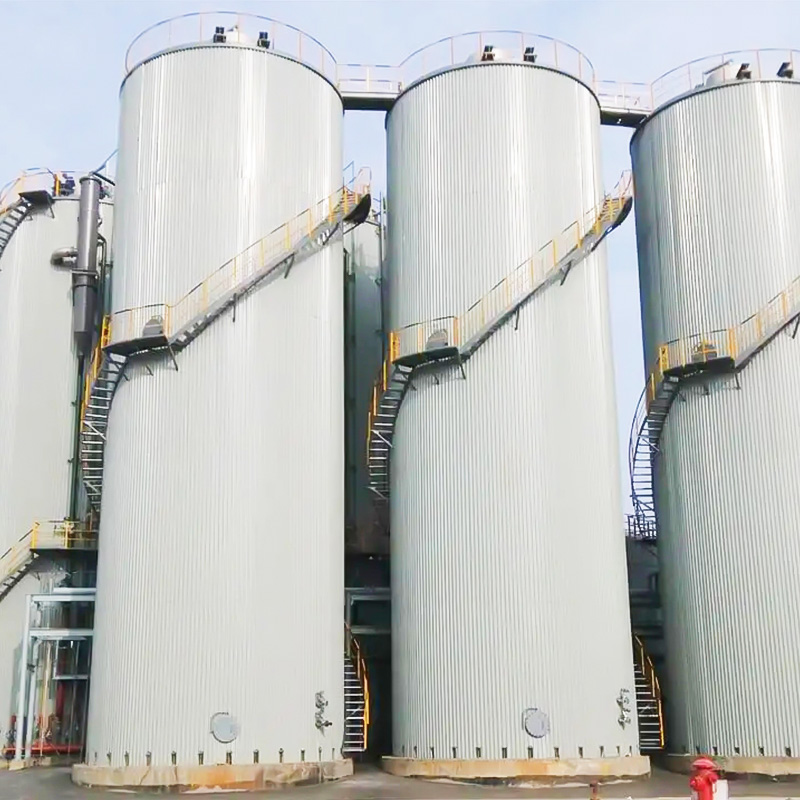
The wastewater from the UASB reactor is introduced as evenly as possible into the bottom of the reactor, and the sewage flows upward through a sludge bed containing granular sludge or flocculent sludge. Anaerobic reactions occur during the process of contact between wastewater and sludge particles. The biogas produced under anaerobic conditions (mainly methane and carbon dioxide) causes internal circulation, which is beneficial for the formation and maintenance of granular sludge. Some gases formed in the sludge layer adhere to the sludge particles, and the attached and unattached gases rise towards the top of the reactor. The sludge rising to the surface collides with the bottom of the gas emitter in the three-phase reactor, causing the sludge flocs with attached bubbles to degas. After the release of bubbles, the sludge particles will settle on the surface of the sludge bed, and the attached and unattached gases will be collected in the gas collection chamber of the three-phase separator at the top of the reactor. The function of the baffle placed under the extreme unit gap is to act as a gas emitter and prevent biogas bubbles from entering the sedimentation zone, otherwise it will cause flocculation in the sedimentation zone and hinder particle sedimentation. The liquid containing some remaining solids and sludge particles enters the sedimentation zone through the separator gap.
Due to the increased flow area of the inclined sedimentation zone of the separator near the water surface, the upward flow velocity decreases near the discharge point. Due to the decrease in flow rate, sludge flocs can coagulate and settle in the sedimentation zone. The accumulated sludge flocs on the three-phase separator will to some extent exceed the frictional force it maintains on the inclined wall, and it will slide back to the reaction zone, where this part of the sludge will react with the incoming organic matter.
2、 Construction
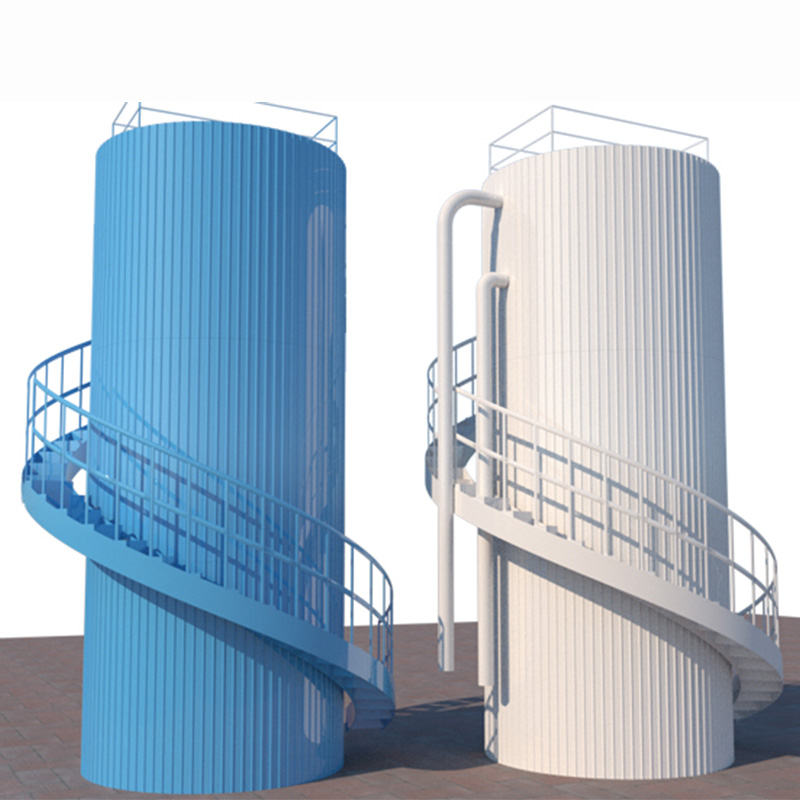
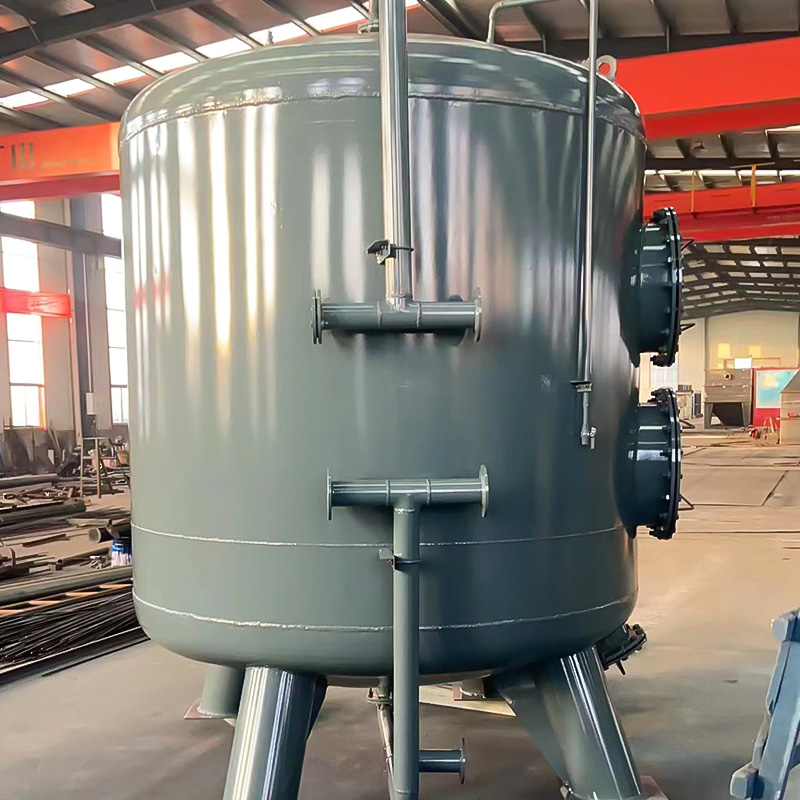
The structural feature is the integration of biological reactions and precipitation, making it a compact anaerobic reactor. The reactor is mainly composed of the following parts.
1. Water distribution system
Its main function is to evenly distribute the raw wastewater entering the reactor to the entire cross-section of the reactor and rise uniformly;
2. Plays a role in hydraulic mixing. These are all key steps for the efficient operation of the reactor.
2. Reaction zone
It is the main part of UASB, including the granular sludge area and the suspended sludge area. A large amount of anaerobic sludge remains in the reaction zone, and sludge with good coagulation and sedimentation properties forms a granular sludge layer at the bottom of the tank. Wastewater flows into the bottom of the sludge bed and comes into contact with granular sludge. Microorganisms in the sludge decompose organic matter, while tiny biogas bubbles are continuously released. During the ascent of tiny bubbles, they continuously merge and gradually form larger bubbles. In the upper part of the granular sludge layer, a suspended sludge layer with lower sludge concentration is formed due to the agitation of biogas.
3. Three phase separator
It consists of a sedimentation zone, a reflux joint, and a gas seal, and its function is to separate the three phases of gas (biogas), solid (sludge), and liquid (wastewater). Biogas enters the gas chamber, while sludge settles in the sedimentation zone and flows back to the reaction zone through the reflux joint. The clarified wastewater after sedimentation is discharged from the reactor as treated water.
The separation effect of the three-phase separator will directly affect the treatment efficiency of the reactor.
4. Air chamber
Also known as a gas collection hood, its function is to collect the generated biogas and export it from the gas chamber to the biogas tank.
5. Water treatment and discharge system
The function is to collect the treated water on the surface of the sedimentation zone evenly and discharge it out of the reactor.
In addition, a sludge discharge system and a floating slag removal system should be installed in the reactor as needed.
3、 Characteristics
Compared with other types of anaerobic reactors, it has the following advantages:
1. The biomass in the sludge bed is high, and the calculated concentration can reach 20-30 g/L;
2. The volumetric load rate is high, and under medium temperature fermentation conditions, it can generally reach around 10kgCOD/(m ³. d), and even up to 15-40kgCOD/(m ³. d). The hydraulic retention time of wastewater in the reactor is relatively short, so the required tank capacity is greatly reduced.
3. The equipment is simple and easy to operate, without the need for sedimentation tanks and sludge reflux devices, filling materials, or mechanical stirring devices in the reaction zone. The cost is relatively low, easy to manage, and there is no blockage problem.
The main content includes: ① selecting the pool type based on water quality characteristics, water volume size, removal rate, etc., and determining the main dimensions; ② Design inlet, distribution, and outlet systems; ③ Select the type of three-phase separator and biogas recovery equipment.
If you are looking for a reliable water treatment equipment supplier or manufacturing partner,
please feel free to contact us.
We are ready to support your water and wastewater treatment projects.

 Telephone
 WhatsApp
 Email:
 Address