

Search


Chlorine dioxide generator
Chlorine dioxide generator




I. Overview
Zeyan Zongheng (Shandong) Environmental Technology Co., Ltd., headquartered in Weifang City, Shandong Province, is a high-tech environmental water treatment enterprise that integrates scientific research, manufacturing, and services. The company specializes in producing chlorine dioxide generators, chlorine dioxide dosing devices, integrated water treatment systems, automated PAM preparation and dosing systems, and automated PAC dosing equipment; it also provides comprehensive one-stop services encompassing the supply of specialized raw materials for chlorine dioxide dosing devices, as well as the integrated procurement, installation, and commissioning of water treatment equipment.
The ZY-type chlorine dioxide doser is a product developed by our company through years of exploration, innovation, and practical application, based on in-depth research into advanced technologies of similar products both domestically and internationally, and utilizing state-of-the-art manufacturing processes along with specialized high-quality materials. This product is characterized by its pure output, high conversion efficiency, user-friendly operation, low operating costs, low failure rate, and long service life; its overall performance ranks among the leading levels in the domestic market.
II. Structural Characteristics and Operating Principle
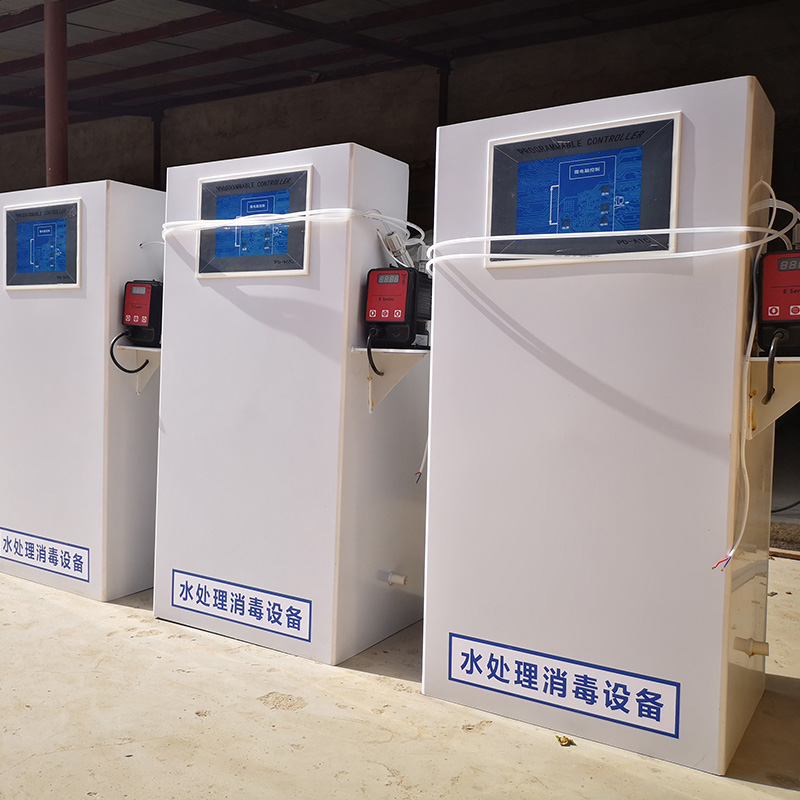
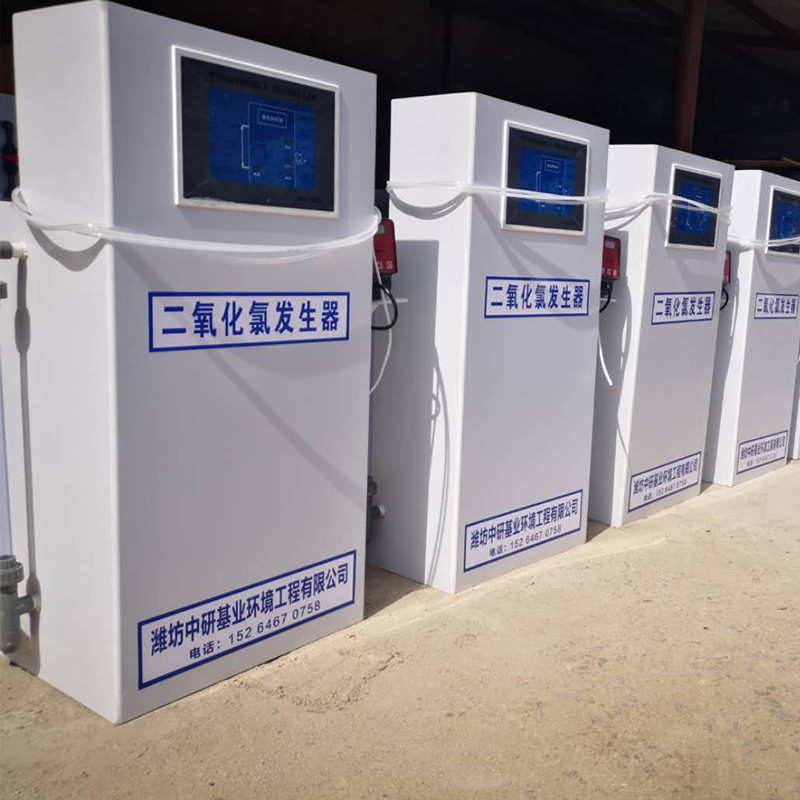
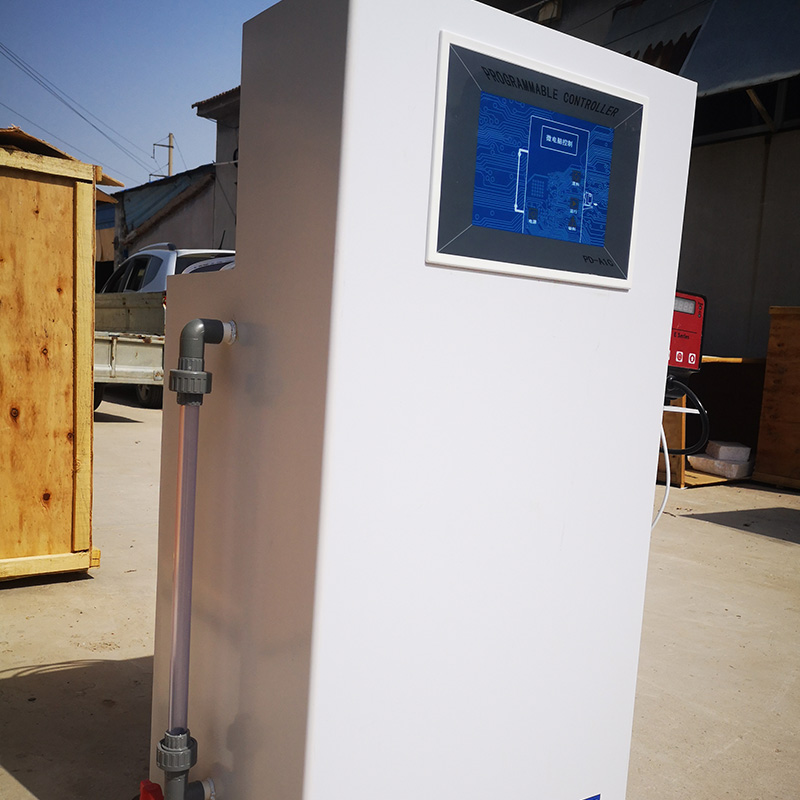
The ZY-type chlorine dioxide dosing device consists of a drug storage system, a chemical feeding system, a dosing system, a feed shortage protection system, and an electrical control system.
Operating Principle: Fill the medication storage tank with an appropriate amount of tap water and add an appropriate quantity of disinfectant solution. Then, connect the power supply and turn on the equipment to initiate automated dosing of the disinfectant solution; the solution is then delivered into the water stream to be disinfected via the dosing system (the dosage delivered by the metering pump can be adjusted according to requirements).
III. Equipment Installation
(1) Installation Requirements
1. The equipment should be installed indoors, away from direct sunlight; the operating temperature range is 5°C–40°C.
2. Due to the strong corrosiveness of disinfectants, when selecting the installation location for the equipment, it should be avoided to place it in the same room as other electrical equipment; instead, a dedicated equipment room should be established.
3. The floor of the equipment room shall be paved with cement (it is preferable to install floor tiles), and a water supply for flushing as well as a drainage system shall be provided.
4. The equipment room should be well-ventilated; since chlorine dioxide gas has a greater specific gravity than air, an exhaust fan should be installed at the bottom of the walls.
5. The equipment room shall be equipped with running water supply.
6. The equipment room shall be equipped with necessary lighting facilities and one 220 V, 10 A power switch.
(2) Installation Procedure and Precautions
1. Installation Program
(1) Determine the disinfectant dosing point and the equipment installation location.
(2) Install the dosing pipeline and connect it to the dosing point.
(3) Place the equipment in the appropriate position and connect the backpressure valve to the dosing pipeline.
(4) Install the water inlet pipe.
2. Installation Precautions
(2) Equipment Installation
The equipment installation location should generally be chosen near a water supply source and in a position that is convenient for operation. During installation, ensure that sufficient maintenance space is reserved to facilitate upkeep.
For components that were pre-installed at the time of factory delivery, re-inspect them after unpacking; any loose components should be tightened.
The connection between the water supply and the equipment should preferably be made using rigid PVC piping.
IV. Usage, Operating Procedures and Precautions
1. Pre-use preparation and inspection
Pre-use inspection items:
① Check whether any threaded connections are loose; if so, tighten them.
② Fill the water tank completely from the water inlet (failure to fill the tank will prevent power supply; otherwise, the metering and circulation systems may be damaged by overheating).
③ Power on the equipment and check whether electrical components, such as the metering pump, are operating normally.
④ Operating the machine without load is strictly prohibited.
2. Equipment Operation
1. Start
First, open the inlet valve; once the liquid level reaches the upper end of the visible level gauge, close the inlet valve.
Please check again for any water leakage.
If no abnormalities are detected, add an appropriate amount of the chemical to the dosing port.
Turn on the device's power supply, open the circulation pump valve (unless for maintenance purposes, it is advisable to keep it permanently open), and start the material circulation system. Operate the chemical dosing process according to the specific chemical being used.
After completing the material feeding process, start the metering pump; if air is present in the metering pump pipeline, discharge the air first and then check whether the metering pump is operating normally.
3. Equipment output adjustment
Adjust the equipment's output based on actual consumption; this is primarily achieved by controlling the dosing flow rate of the metering pump – the greater the dosing flow rate, the higher the output; conversely, the lower the output.
Note: The manual frequency adjustment of the metering pump must be performed only while the pump is in operation; it should not be adjusted when the metering pump is stopped.
4. Power off
Press the screen off button.
Note: If the device will not be used for an extended period, turn off the power switch.
5. Inspection
During equipment operation, regular inspections should be conducted; any abnormal conditions identified should be addressed promptly. If a strong odor is detected in the equipment room or at the exhaust pipe, the dosing metering pump should be shut down immediately.
6. Equipment Cleaning
After prolonged operation of the equipment, the amount of sediment in the reactor may increase, adversely affecting the equipment's production yield; therefore, the reactor should be cleaned regularly—typically once per year. During cleaning, pour clean water into the water inlet, let it stand for 30 minutes, then drain the water through the discharge port; repeat this process several times until the reactor is thoroughly cleaned.
7. Metering pump maintenance
The metering pump must be protected against water ingress during operation or when cleaning the equipment. After filling the raw material tank, check whether any gas has entered the metering pump's delivery hose; if so, drain it promptly. Regularly inspect the metering pump for any leaks; if a leak is detected, tighten the bolts immediately or perform maintenance (refer to the metering pump's instruction manual for details).
8. Important Notes:
1. The metering pump should be protected against water ingress.
2. The equipment casing is made of PVC plastic; avoid impacts or compression, and protect it from direct sunlight.
3. During winter, take precautions against freezing and implement necessary anti-freezing measures to prevent damage to equipment and chemical dosing pipelines; the equipment room should be kept dry, shielded from light, and well-ventilated. The ambient temperature in the equipment room should range from 5°C to 40°C.
4. Before powering on the equipment, ensure that it is fully filled with water.
5. The chemical is corrosive; operators should wear protective gloves.
6. The chemical solution possesses strong oxidizing properties; the plastic hoses and sealing rings of the equipment are prone to aging and should be replaced regularly.
7. Please read the user manual carefully.
V. Common Faults and Troubleshooting Methods – Part 1:
|
phenomenon |
cause |
Exclusion Method |
|
Metering pump flow rate is too high |
Backpressure valve or the inlet/outlet check valve of the pump is damaged; or the metering pump's stroke frequency is too high. |
Maintain or replace the backpressure valve and check valve. Re-adjust stroke length |
|
The metering pump flow rate is too low. |
Backpressure valve malfunction Metering pump diaphragm damage The metering pump's stroke frequency is too low. |
Maintain or replace the backpressure valve Replace the diaphragm Re-adjust stroke length |
|
controlled volume pump weeping |
Diaphragm damage Pump head screw is loose Pump head damage |
Replace the diaphragm tighten the screws Replace pump head |
|
Water level low indicator light illuminated |
Insufficient equipment water storage |
watering |
|
Device Power Supply Voltage Declaration Given the current power supply conditions in certain domestic regions, the voltage not only exceeds the national regulatory limits but also falls outside the permissible range specified for our company's products; if the power supply voltage in such regions is below 198 V or above 244 V, these excessive voltage fluctuations can adversely affect equipment operation or even cause damage to the equipment components, particularly the metering pump. For regions or organizations where the power supply voltage fluctuates or surge voltages exceed the permissible range, we recommend installing AC voltage stabilizing equipment. Our company shall not be liable under any quality assurance provision for any loss of equipment or equipment components resulting from power supply voltage exceeding the specified range. Before using this device, please read the user manual carefully. Zeyan Zongheng (Shandong) Environmental Technology Co., Ltd. |
If you are looking for a reliable water treatment equipment supplier or manufacturing partner,
please feel free to contact us.
We are ready to support your water and wastewater treatment projects.

 Telephone
 WhatsApp
 Email:
 Address